Showing posts with label clinical trial design. Show all posts

Friday, July 03, 2026

The Rejuvenation Revolution: Inside the First Waves of Human Longevity or Anti-Aging Clinical Trials

For decades, longevity science was restricted to petri dishes and mouse models. We watched as mice regained their vision, ran farther on treadmills, and lived 30% longer through cellular interventions. But what worked in a laboratory rodent rarely made it to humans.


That script has officially flipped. The longevity field has entered a historic transition phase: moving from theoretical biogerontology to active human clinical trials.

A new blueprint for human longevity trials is emerging, anchored by high-stakes initiatives like David Sinclair's systemic whole-body rejuvenation cocktail (SL-100) aiming for the $101M XPRIZE Healthspan competition, and massive institutional players like Life Biosciences and Retro Bio executing multi-million dollar biotech roadmaps.

1. The Strategy: How Do You Design a Trial for "Aging"?

The biggest hurdle in longevity research isn't the science; it's the regulatory framework. The U.S. Food and Drug Administration (FDA) does not recognize "aging" as a disease or a treatable indication. It treats "aging" as a natural process. Consequently, pharmaceutical therapies cannot be approved for "anti-aging" per se. To develop longevity therapeutics, researchers must target specific, diagnosable age-related conditions, such as Alzheimer's disease, Sarcopenia

To design a trial for "aging", researchers must choose between two primary trial design pathways to get therapeutics into humans:

Pathway A: The Proxy Indication Model (Targeted Tissue Trials)

Instead of trying to treat the whole body at once, biotechs target a specific, severe, age-related disease where the underlying pathology is driven by cellular aging.

  • The Design: Typically sequential cohorts, starting with open-label dose-escalation phases to establish safety, moving into larger randomized cohorts.

  • The Regulatory Playbook: The FDA has shown clear openness to clinical testing of rejuvenation-style technologies when sponsors anchor them to a recognized disease, use accepted clinical outcomes, and build strong safety controls. This disease-first rule keeps regulators happy while allowing researchers to test the underlying biology of age reversal.

Pathway B: The Cross-Functional Systemic Model

Championed by competitions like the XPRIZE Healthspan, this design targets the overarching degradation of the human body by measuring functional physiological pillars.

  • The Design: The long-term XPRIZE framework mandates a one-year treatment window, tracking whether systemic therapies can demonstrably roll back a participant's functional capacity. The current semifinal phases utilize short-term, small-scale pilot trials (typically 4 to 16 weeks across 10–20 subjects) to establish basic baseline safety, safety clearance, and early biomarker reads before expanding into massive international multi-site trials.

2. The Investigational Products: What's Being Tested?

We have moved far beyond generic vitamin supplementation. The products currently entering human veins and tissues represent cutting-edge biotechnology.

Partial Epigenetic Reprogramming (Gene Therapies)

  • Example: Life Biosciences’ ER-100

  • The Mechanism: This is an adeno-associated virus (AAV)-based gene therapy delivered via a single localized injection. Rooted in the Information Theory of Aging from Harvard's David Sinclair lab, it delivers instructions for cells to express a specific trio of transcription factors: OCT4, SOX2, and KLF4 (OSK). This combination prompts cells to reset their epigenetic code to a more youthful state, restoring original gene expression patterns without wiping out cellular identity entirely (crucially omitting the oncogenic c-Myc factor). The system is tightly controlled, using an oral activator like systemic doxycycline for 8 weeks to switch the reprogramming factors "on."

Oral Senolytics and PAI-1 Inhibitors (Small Molecules)

  • Example: RS5614 (developed by RenaScience for the XPRIZE) and David Sinclair's confidential oral cocktail SL-100

  • The Mechanism: These are oral small-molecule therapeutics. RS5614 acts as a plasminogen activator inhibitor-1 (PAI-1) inhibitor, working under the concept of a senolytic—a drug designed to selectively eliminate lingering, toxic "zombie" cells (senescent cells) that secrete inflammatory factors and degrade surrounding healthy tissue. Sinclair's SL-100 is an oral small-molecule cocktail aiming for chemical reprogramming via the bloodstream to trigger a whole-body rejuvenation effect.

3. Active Registrations: Longevity Enters the Clinic

The concept has officially transformed into a real-world protocol.

ct.gov NCT07290244: The Landmark First-In-Human Reprogramming Trial
  • Sponsor: Life Biosciences Inc. (Co-founded by David Sinclair)
  • Status: Active / Recruiting (First participant dosed on June 9, 2026)
  • The Target: Open-Angle Glaucoma (OAG) and Non-Arteritic Anterior Ischemic Optic Neuropathy (NAION). Both conditions involve irreversible damage to retinal ganglion cells (RGCs), the primary neurons connecting the eye to the brain, which do not naturally regenerate.
  • Primary Endpoints: Safety, tolerability, and systemic immune responses following a single dose of ER-100.
  • Secondary / Efficacy Endpoints: Multi-system visual assessments, including visual acuity (letters read on an eye chart) and visual field sensitivity tests to track if cellular rejuvenation actively restores lost vision.

4. The Endpoints: What are the Outcome Measures?

If a drug makes an individual "younger," how do clinicians actually measure that? Longevity trials rely on a strict matrix of functional and molecular endpoints:

Functional CategoryPrimary Outcome Measures
Visual FunctionLetters read on an eye chart, visual field sensitivity, and Retinal Ganglion Cell (RGC) survival metrics.
Muscle FunctionHandgrip strength, gait speed, and physical performance batteries (e.g., VO2 max).
Cognitive FunctionStandardized neuropsychological test batteries evaluating memory, processing speed, and executive function.
Immune FunctionT-cell receptor diversity, systemic inflammatory cytokine profiles (SASP tracking), and immune cell counts.

The Molecular Arbiters: Epigenetic Clocks

To look beneath functional performance, trials are heavily utilizing epigenetics-based biological clocks (such as the Horvath Clock). By measuring patterns of DNA methylation across the genome at baseline versus post-treatment, investigators can determine if a therapeutic has physically rolled back the biological age of the patient's cells relative to their chronological age.

5. The Control Problem: How Do We Know It Works?

One of the most vital questions in clinical statistics is control group. Are these trials controlled?

The answer depends entirely on the phase and scope of the trial:

Phase 1 and Semifinal Pilots: Open-Label, No Control Group

Many of the immediate longevity trials hitting the news are early-stage, small-scale safety evaluations. For instance, the Phase 1 trial for ER-100 targets an enrollment of roughly 18 patients and operates without a concurrent control group.

  • How do we know it works without a control group?

    In these early phases, investigators use Within-Subject Control (Baseline Comparison). Every participant acts as their own control. Extensive, rigid clinical baselines are established prior to drug administration. Efficacy trends are determined by measuring how significantly an individual deviates from their own degenerative trajectory post-baseline.

Phase 2, Phase 3, and Final Competitions: Randomized Controlled Trials (RCTs)

To actually prove a drug reverses aging to regulatory bodies, a control group is mandatory. The FDA does not yet see enough proof that any aging biomarker reliably predicts patient outcomes on its own. Therefore, decisions still depend on disease-specific results showing how patients feel, function, or survive. Upcoming final rounds of the XPRIZE Healthspan competition, as well as subsequent Phase 2/3 trials from entities like Life Biosciences and Retro Bio, are structured as international, multi-site, placebo-controlled clinical studies to completely blind functional endpoints and eliminate the powerful psychological placebo effects often tied to longevity therapeutics.

The Bottom Line

The longevity landscape has officially shed its science-fiction skin. Backed by hundreds of millions in institutional funding—including Sam Altman's massive $180M backing of Retro Bio—companies are establishing the rigorous clinical framework required to turn age-reversal into valid medicine. By isolating localized tissues like the optic nerve for strict FDA disease pathways, and utilizing robust, multi-system functional testing for systemic therapies, the next 24 to 36 months will provide the first randomized, controlled human data indicating whether we can truly turn back our biological clocks.

For a deeper dive into the leading biotechnology firms shaking up this sector, check out this comprehensive overview tracking the Top 11 Longevity Companies. This breakdown highlights the specific therapeutic platforms, from cellular reprogramming to autophagy, that are currently transitioning from the lab to the clinic.

Monday, September 15, 2025

Steroid Tapering Design in Action - Failed

In a previous post, I discussed steroid tapering design clinical trials. In these trials, the primary efficacy endpoint is the reduction in steroid dose. Efficacy is demonstrated if patients receiving the experimental treatment are able to reduce their steroid dose significantly more than those in the placebo group.

Steroids remain highly effective for many conditions, particularly those involving chronic inflammation or an overactive immune system. However, long-term or high-dose steroid use is associated with numerous side effects. Therefore, it is highly desirable to develop therapies that allow for steroid dose reduction—or even complete steroid sparing—while maintaining disease control.

One of these diseases is sarcoidosis or lung sarcoidosis. Sarcoidosis is an inflammatory disease in which the immune system overreacts, causing groups of cells to form clusters of inflamed tissue called "granulomas" in one or more organs of the body. The most affected organ is lung. Sarcoidosis symptoms can be treated using corticosteroids, or prednisone, which turn down the immune system's activity to reduce inflammation.

A sponsor, aTyr Pharma, conducted a phase 3, confirmatory trial to investigate if their experimental drug efzofitimod is effective in treating the pulmonary sarcoidosis. The study "Efficacy and Safety of Intravenous Efzofitimod in Patients With Pulmonary Sarcoidosis" was designed as steroid tapering with the primary efficacy endpoint being "Change from baseline in mean daily oral corticosteroid (OCS) dose at Week 48".

This morning, the sponsor issued a press release announcing Topline Results from Phase 3 EFZO-FIT™ Study of Efzofitimod in Pulmonary Sarcoidosis. Study did not meet primary endpoint in change from baseline in mean daily oral corticosteroid (OCS) dose at week 48, although clinical benefit for efzofitimod observed across multiple study parameters.

The change from baseline in mean daily OCS dose reduced to an average of 2.79 mg for the high dose of efzofitimod versus 3.52 mg for placebo, resulting in an insignificant treatment difference. The sponsor blames the unexpected placebo response.

The steroid tapering design offers important clinical advantages by directly addressing the need to reduce long-term steroid exposure, a major source of morbidity in many chronic inflammatory and immune-mediated diseases. The steroid tapering design and the change from baseline in steroid dose is accepted by the regulatory agencies. It provides a patient-centered and easily quantifiable endpoint that demonstrates whether an investigational treatment can maintain disease control while allowing for a lower steroid dose. 

However, this design also has limitations. Variability in tapering schedules, risk of disease flares, and ethical concerns regarding aggressive tapering in placebo groups can complicate interpretation. In addition, results may be less generalizable to steroid-naïve patients, and regulatory acceptance of steroid-sparing endpoints as stand-alone primary outcomes remains uncertain. Careful planning and standardization are therefore essential to balance the scientific value with patient safety and trial credibility.

Thursday, December 14, 2023

Defining 'disease modification effect', 'disease modification therapy (DMT)' or 'disease modifier'

The concept of "disease modification," "disease modification therapy (DMT)," and "disease modifier" has been a focal point in the realm of drug development for chronic diseases. The distinction reaches a heightened significance when a drug under development qualifies as a true disease modifier. Disease modification is a default for acute diseases (for example, the acute infections) and for gene therapies, transplants, some surgeries. The focus of our discussion about the disease modification is mainly for chronic diseases. 

Disease modification entails interventions or treatments designed not solely to alleviate symptoms but also to actively influence the trajectory of the disease, effectively impeding or halting its progression.

It's important to note that a unified definition for disease modification does not exist. The nuances of the term, as well as what qualifies as a disease modifier, can vary across different diseases. The understanding and criteria for disease modification may differ, reflecting the intricacies inherent to each specific medical condition.

In a review paper by Vollenhoven et al "Conceptual framework for defining disease modification in systemic lupus erythematosus: a call for formal criteria", authors put together a table summarizing various definitions for disease modification in different disease areas: 


As we are doing the clinical trials, the spectrum of treatment response can be listed as the following: 
Harm -> No Response -> Modest Response -> Strong Response -> Disease Modifying -> Cure. For most chronic diseases, the ultimate outcome of a 'cure' may not be achievable. A therapy with a disease modification effect will be desirable. 

There was a proposal to classify the disease modification into five different levels: 
Level 1: Slowing decline
Level 2: Arrest decline
Level 3: Disease improvement
Level 4: Remission
Level 5: Cure

In a review article for Alzheimer's disease, "Trial Designs Likely to Meet Valid Long-Term Alzheimer's Disease Progression Effects: Learning from the Past, Preparing for the Future", the changes in the level of functioning across time were depicted as the following. 'Slowing progression' would be considered as 'disease modification'. 


Alzheimer’s Disease: Towards a Personalized Polypharmacology Patient-Centered Approach", the following was said about the disease modification therapy in Alzheimer's disease:
A disease-modifying treatment (DMT) is defined as an intervention that produces an enduring change in the clinical progression of AD by interfering with the underlying pathophysiological mechanisms of the disease process that lead to neuronal death. Consequently, a true DMT cannot be established conclusively based on clinical outcome data alone, such a clinical effect must be accompanied by strong supportive evidence from a biomarker program.
In 2011, there was an FDA advisory committee meeting to discuss Teva's Parkingson's drug for disease modification indication. According to the FDA briefing book, to demonstrate the disease modification effect, three hypothesis tests are needed to analyze the data from the study with a delayed start design (even though the disease modification claim was voted down): 
The study was to be analyzed according to three hypotheses, in the following order: 
  • Hypothesis 1-the contrast between the slope of drug and placebo response at Week 36 (using data from weeks 12-36; Linear Mixed Model with random intercept and slope) 
  • Hypothesis 2-the contrast of scores between baseline and Week 72 (Repeated Measures) 
  • Hypothesis 3-a non-inferiority analysis of the slopes of the ES and DS patients from weeks 48-72 (Linear Mixed Model with random intercept and slope) 
The first hypothesis was designed to determine that a difference between treatments emerged in Phase 1, the second hypothesis was designed to determine that there was a difference between ES and DS patients at the end of the study, and the third hypothesis was to determine that an “absolute” difference between the ES and DS patients persisted during Phase 2 (that is, even though a difference between groups at the end of the study might have existed [what was 4 tested by Hypothesis 2], it was important to show that the two groups were not approaching each other). 
To delve into the realm of disease modification therapy research, it is imperative to establish a standardized definition for disease modification, particularly tailored to the nuances of a specific disease area. This foundational step serves as a compass guiding subsequent investigations. Following the definition, the identification of endpoints to measure the disease modification effect becomes paramount. Given the nuanced nature of disease modification effects, the conventional clinical trial designs may prove insufficient. Hence, a specialized approach involving clinical trial designs (such as delayed start design and randomized withdrawal design) with multiple hypothesis tests becomes a requisite. Such a methodological shift is essential to comprehensively capture and validate the nuanced impacts of disease modification therapies.

Friday, October 20, 2023

Human Challenge Study Design in Action - a Dengue Fever vaccine trial

A human challenge study, also known as a controlled human infection model (CHIM), is a type of clinical research study in which healthy volunteers are intentionally exposed to a specific pathogen (such as a virus, bacterium, or parasite) under controlled conditions. The primary goal of these studies is to better understand the pathogen's behavior, the human immune response to it, and to test the effectiveness of potential treatments, vaccines, or preventive measures. Human challenge studies can provide valuable insights into disease progression, immunity, and treatment efficacy in a controlled and ethical manner.

These studies are typically conducted under strict ethical and safety guidelines to minimize the risk to participants. Participants are closely monitored, and their informed consent is obtained. Human challenge studies have been used to study a variety of diseases, including influenza, malaria, Dengue fever, and COVID-19, among others. They play a crucial role in advancing medical and scientific knowledge and can accelerate the development of treatments and vaccines.

A human challenge study was mentioned as an alternative clinical trial design at the beginning of the COVID-19 pandemic when the world was desperate to find an effective and safe vaccine. I wrote an article about this: "Human Challenge Study Design for Covid-19 Vaccine Clinical Trials?"

Just this morning, Janssen Announces Promising Antiviral Activity Against Dengue in a Phase 2a Human Challenge Model. The results were from a phase 2a study titled "A Phase 2a, Randomized, Double-blind, Placebo Controlled Trial to Evaluate the Antiviral Activity, Safety, and Pharmacokinetics of Repeated Oral Doses of JNJ-64281802 Against Dengue Serotype 3 Infection in a Dengue Human Challenge Model in Healthy Adult Participants" that was posted on clinicaltrials.gov. Unfortunately, the clinical trial registration did not contain any description of the 'Challenge' part (i.e., how the healthy volunteers are exposed to the infectious agents (in this case, the Dengue virus). We will just need to wait for the formal publication of the study to know the details. 

In a paper by Porter et al "A human Phase I/IIa malaria challenge trial of a polyprotein malaria vaccine", the whole details about the human challenge study including the 'challenge' part were discussed. The 'sporozoite challenge' to the healthy volunteers was described below: 


Sunday, May 21, 2023

Comparing assumptions for sample size estimation with the interim and final results

Sample size estimation is one of the critical aspects of the clinical trial design. The sample size estimation is usually based on the primary efficacy endpoint. If the primary efficacy endpoint measure is a continuous variable, the sample size estimation will need to be based on assumptions about the effect size (for example, the difference in means) and the common standard deviation If the primary efficacy endpoint measure is a rate and proportion, the sample size estimation will need to be based on the effect size (for example, the difference in responder rate) and the rate/proportion in the control group. 

Sometimes, the sample size estimations can be grossly inaccurate primarily because the assumptions used for the sample size calculation deviate from the observed data. This is especially true in planning pivotal studies with no or insufficient early-phase clinical trial data. 

It is important to check the assumptions for sample size estimation during the study and adjust the sample size when the observed data suggests the inaccuracy of these assumptions. The process is essentially the "Adaptations to the Sample Size" described in FDA's guidance "Adaptive Designs for Clinical Trials"

"Accumulating outcome data can provide a useful basis for trial adaptations. The analysis of outcome data without using treatment assignment is sometimes called pooled analysis. The most widely used category of adaptive design based on pooled outcome data involves sample size adaptations (sometimes called blinded sample size re-estimation). Sample size calculations in clinical trials depend on several factors: the desired significance level, the desired power, the assumed or targeted difference in outcome due to treatment assignment, and additional nuisance parameters—values that are not of primary interest but may affect the statistical comparisons. In trials with binary outcomes such as a response or an undesirable event, the probability of response or event in the control group is commonly considered a nuisance parameter. In trials with continuous outcomes such as symptom scores, the variance of the scores is a nuisance parameter. By using accumulating information about nuisance parameters, sample sizes can be adjusted according to prespecified algorithms to ensure the desired power is maintained. In some cases, these techniques involve statistical modeling to estimate the value of the nuisance parameter, because the parameter itself depends on knowledge of treatment assignment. These adaptations generally do not inflate the Type I error probability. However, there is the potential for limited Type I error probability inflation in trials incorporating hypothesis tests of non-inferiority or equivalence. Sponsors should evaluate the extent of inflation in these scenarios." 

 "One adaptive approach is to prospectively plan modifications to the sample size based on interim estimates of nuisance parameters from analyses that utilize treatment assignment information. For example, there are techniques that estimate the variance of a continuous outcome incorporating estimates of the variances on the individual treatment arms, or that estimate the probability of a binary outcome on the control arm based on only data from that arm. These approaches generally have no effect, or a limited effect, on the Type I error probability. However, unlike adaptations based on non-comparative pooled interim estimates of nuisance parameters, these adaptations involve treatment assignment information and, therefore, require additional steps to maintain trial integrity.
Another adaptive approach is to prospectively plan modifications to the sample size based on comparative interim results (i.e., interim estimates of the treatment effect). This is often called unblinded sample size adaptation or unblinded sample size re-estimation. Sample size determination depends on many factors, such as the event rate in the control arm or the variability of the primary outcome, the Type I error probability, the hypothesized treatment effect size, and the desired power to detect this effect size. In section IV., we described potential adaptations based on non-comparative interim results to address uncertainty at the design stage in the variability of the outcome or the event rate on the control arm. In contrast, designs with sample size adaptations based on comparative interim results might be used when there is considerable uncertainty about the true treatment effect size. Similar to a group sequential trial, a design with sample size adaptations based on comparative interim results can provide adequate power under a range of plausible effect sizes, and therefore, can help ensure that a trial maintains adequate power if the true magnitude of treatment effect is less than what was hypothesized, but still clinically meaningful. Furthermore, the addition of prespecified rules for modifying the sample size can provide efficiency advantages with respect to certain operating characteristics in some settings."

One thing that is often neglected is to compare the final results with the assumptions. When a clinical trial is concluded, it is always good to check how different the final results are from the assumptions. If the final results are positive (indicating the success of the trials), people tend to ignore the assumptions made during the trial planning stage. Only if the final results are negative (indicating the failure of the trials), do people tend to go back to the assumptions and claim that the trial failed due to inaccurate assumptions leading to the lack of statistical power. 

Biogen's Tofersen for SOD1-ALS

Biogen designed a Valor study as the pivotal study to investigate the effect of tofersen for the treatment of patients with Amyotrophic Lateral Sclerosis (ALS) associated with mutations in the superoxide dismutase 1 (SOD1) gene (SOD1-ALS) - a subset of general ALS population. The primary efficacy endpoint is  the ALSFRS-R score and the sample size for the study was based on assumptions about the ALSFRS-R score. 

"We calculated that a sample size of 60 participants (2:1 randomization ratio) in the faster-progression primary analysis subgroup would provide 84% power to detect a between-group difference on the basis of the joint rank test (described below), assuming a change in the ALSFRS-R score from baseline to week 28 of −4.8 in the tofersen group and −24.7 in the placebo group, with a standard deviation of 20.39 and survival of 90% in the tofersen group and 82% in the placebo group, at a two-sided alpha level of 0.05."

The final results indicated that assumptions were so inaccurate. In the placebo group, the change from baseline to week 28 is -8.14 (versus assumed -24.7).

Usually, it is the sponsor's responsibility to ensure that the assumptions for sample size calculation are as accurate as possible. If inaccurate assumptions are used in sample size calculation that leads to the failure of the trial, the regulatory agency may request the sponsor to do additional trials (with more accurate assumptions). However, in Biogen's Tofersen Vilor trial, FDA came to the defense of Biogen why the trial failed in the primary efficacy endpoint in ALSFRS-R score so that they could potentially approve a drug based on the positive results in biomarker and discredit the fact that the study failed in clinical endpoint. In FDA's briefing book for the advisory committee to discuss the Tofersen in SOD1-ALS, the following was mentioned:

Comparing the assumptions for sample size estimation with the analysis results can be complicated by the fact that different statistical methods are used. Sample size estimation may be based on a two-sample t-test while the actual data will be analyzed using more complicated methods (analysis of covariance, mixed model repeated measures, random coefficient model, non-parametric methods,...). For studies with a time-to-event primary efficacy endpoint, the sample size calculation may be based on the log-rank test, and the statistical analyses may be based on the Cox regression where analyses are adjusted for multiple explanatory variables. 

However, it is always good to compare the assumptions for the sample size estimation with the observed data (during the study or at the conclusion of the study). 

Wednesday, May 17, 2023

Another successful trial with randomized withdrawal design

Biotech company PTC Therapeutics announced today that their phase III study of Sepiapterin in PKU patients achieved the primary efficacy endpoint.

PTC Therapeutics Announces APHENITY Trial Achieved Primary Endpoint 

with Sepiapterin in PKU Patients

PKU (Phenylketonuria) is a rare, inherited metabolic disease, which affects the brain. It is caused by a defect in the gene that helps create the enzyme needed to break down phenylalanine. If left untreated or poorly managed, phenylalanine – an essential amino acid found in all proteins and most foods – can build up to harmful levels in the body. This causes severe and irreversible disabilities, such as permanent intellectual disability, seizures, delayed development, memory loss, and behavioral and emotional problems. There are an estimated 58,000 people with phenylketonuria globally.

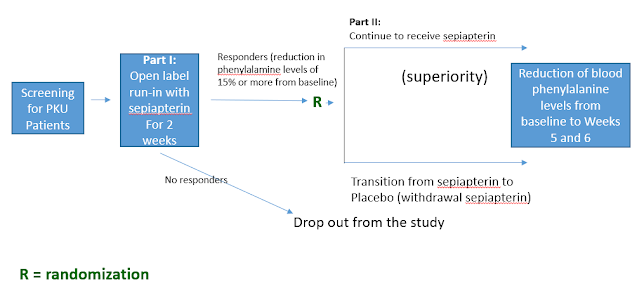
The pivotal license trial is called APHENITY trial and the randomized withdrawal design was used for the trial even though the randomized withdrawal design was not explicitly mentioned. According to PTC's new release, the APHENITY study is described as the following:
APHENITY was a global double-blind, placebo-controlled, registration-directed study which enrolled 156 children and adults with PKU. Participants were randomized to receive sepiapterin or placebo for six weeks with the primary endpoint being reduction in blood phenylalanine levels. The trial consisted of two parts. Part 1 was a run-in phase, during which all screened subjects received sepiapterin for two weeks. Only those subjects who demonstrated a reduction in phenylalanine levels of 15% or more from baseline in Part 1 were randomized to receive either sepiapterin or placebo in Part 2 of the clinical trial. The primary analysis population consists of those who had greater than 30% reduction in phenylalanine levels from baseline during Part 1 of the trial. The primary outcome measure is the reduction of blood phenylalanine levels from baseline compared to Weeks 5 and 6 in patients from Part 2 of the clinical trial. All patients are eligible to enroll in an open label long term clinical trial designed to further evaluate the long-term safety and durable effect of sepiapterin.

The study design (randomized withdrawal design) can be depicted in the following diagram: 


Through the APHENITY trial, it is demonstrated that the randomized withdrawal design can be successfully used in the pivotal study of the rare, inherited metabolic disease.

Refer to the previous posts on randomized withdrawal design:

Monday, February 20, 2023

Open-Label Extension (OLE) Study

I asked OpenGPT to write a blog article about the open-label extension study and got the following response. The contents from OpenGPT seem to be relevant, but not entirely correct. 

"An open-label extension (OLE) study is a type of clinical trial that allows patients who have completed an initial trial to continue receiving the treatment they received during the initial trial. This type of study is beneficial to both the patient and the researcher, as it allows the patient to continue to receive the therapy and the researcher to gain further insight into the effects of the therapy over a longer period of time. 

Open-label extension studies are often used when the initial trial was short-term and the therapy may have long-term effects. This type of study allows researchers to observe the effects of the therapy over a longer period of time and to determine whether the therapy is effective in the long-term. It also allows researchers to observe any possible side effects that may occur over a longer period of time. 

In an open-label extension study, the patient is aware that they are receiving the same therapy that they received during the initial trial. This means that the results of the study are not blinded, as the patient knows what they are receiving. As such, the results of the study may be subject to bias. To reduce the risk of bias, researchers may use a placebo or a control group in the study. 

In addition to the benefits mentioned above, open-label extension studies are also beneficial to patients as they can continue to receive the therapy they received during the initial trial. This is especially beneficial for patients who may not have access to the same therapy outside of the clinical trial. "

Open-label extension (OLE) study is an extension study of a randomized, controlled trial (where the word 'extension' comes from) and is an open-label study (where the word 'open-label' comes from) where all participants receive the experimental drug. OLE study may be sometimes called 'long-term extension study' and is a study following the traditional randomized controlled trial (RCT). All participants in the OLE study are rolled over from the leading RCT - the parent study. 

OLE study can play a useful role in drug development as the sponsors gather additional data on the long-term safety and/or efficacy of the experimental drug, while also giving the RCT participants free access to the drug in development that they are already familiar with after participating in a previous RCT.

In an article by Taylor and Weatherall (2006) "What Are Open-Label Extension Studies For?", the following three purposes were listed for OLE studies:

The first reason is simply to make the (now known to be) effective but as yet unlicensed drug available to participants who were randomized to placebo; this might have been a requirement of the ethics approval or a means of enhancing recruitment to the original RCT. This purpose does not require systematic data collection, and is not a sufficient reason for publishing the results of prolonged observation. 

A second reason is that further, more prolonged observation may disclose adverse effects that were not observed in the original parent RCT. The likelihood of observing such events is low, since the cohorts are almost always too small to reliably detect rare events. In the case of anti-tumor necrosis factor therapies, open-label extension studies failed to detect reactivation of tuberculosis, a problem that was only identified through post-marketing surveillance and national adverse event registries. Even in the case of the early studies of prednisolone in RA, failure to identify significant steroid-induced osteoporosis was more a function of inadequate technology (lack of bone densitometry) than lack of prolonged open-label extension. For example, the study of prednisolone remained randomized for 2 years2. The safety issues do not constitute a sufficient reason for conducting open-label extension studies. 

The third purpose may be to demonstrate continued efficacy of the drug over a longer period of time or to show that participants randomized to receive the active treatment during the open-label phase achieved outcomes similar to those of participants who received the drug from the beginning of the parent RCT.

An OLE study may be designed after a fixed-duration RCT trial where all participants who completed the fixed-duration of treatments in RCT will be eligible for enrolling in the OLE study. The participants in the active arm in the RCT will continue to receive the experimental drug in OLE and the participants in the placebo arm in the RCT will switch to receiving the experimental drug in OLE. This type of design may be called the 'delayed study design' since the participants in the placebo arm will eventually receive the experimental drug, just receive the experimental drug later than those participants in the active arm in the RCT. 

An OLE study may also be designed after an event-driven RCT where participants receive the study drug in various duration and participants will be rolled over to OLE when a non-fatal protocol-defined clinical event occurs or at the end of the study when the total number of events is reached. There will be four different groups of participants who are in the OLE study:

  • Participants in Active Drug group had a non-fatal clinical event during RCT and rolled over to OLE
  • Participants in Placebo group had a non-fatal clincial event during RCT and rolled over to OLE
  • Participants in Active Drug group did not have a clinical event and reached the end of the study in RCT and rolled over to OLE
  • Participants in Placebo group did not have a clinical event and reached the end of the study in RCT and rolled over to OLE


OLE studies have been commonly used in rare disease areas where there is an unmet medical need for the disease and in some cases, there are no alternative treatment options after the RCT participants are off the RCT. If I search clinicaltrials.gov using the terms "open-label extension" or "open label extension", there are more than 4000 OLE studies showing up. 

OLE studies may have different durations (usually greater than 1 year). The duration of an OLE study may depend on the success of the RCT (the parent study). If the RCT is a success, the OLE study will be continued for a longer period of time (perhaps until the drug approval and the commercial drug becoming available). If the RCT fails, the OLE study must be discontinued. 

The OLE study is against the concept of the clinical equipoise and statistical equipoise. Equipoise is defined as a state of genuine uncertainty on the relative value (risk-benefit) of two different treatment options being compared in a clinical trial and is the basis for designing randomized controlled trials. The OLE study following an RCT assumes there are benefits in the experimental drug. It is possible to receive criticism when an OLE study is designed while the risk-benefit profile of the experimental drug has not been sufficiently characterized to justify the extension. 

There may be a debate about the OLE study in terms of the utility of OLE study data and the ethics of enrolling participants in the OLE study. From the regulatory standpoint, given the lack of a control arm in the OLE study, the data from the OLE study may provide limited safety and efficacy support to demonstrate the substantial evidences of efficacy and safety. As such, conducting OLE studies is of unclear utility in terms of regulatory decision-making. There may be potential ethical concerns with continuing patients for a prolonged period on an experimental treatment for which there is minimal efficacy data. 

We do see that the OLE study data was used to support/strengthen the evidence of the effectiveness of experimental drugs in NDA/BLA submissions. For example, the data from an OLE study, along with the results from a phase 2 RCT, was included in the NDA submission by Amylyx for their drug (Phenylbutyrate–Taurursodiol) in the treatment of Amyotrophic Lateral Sclerosis (ALS). The survival data from both the RCT and the OLE study were analyzed to provide evidence of survival benefits. After two advisory committee meetings, FDA finally approved Amylyx's drug (Relvyrio) for the treatment of ALS based on the efficacy evidence from a small phase 2 RCT supported by the survival data from the combined RCT and OLE study.  

In summary, there are pros and cons to conducting the OLE study following an RCT. 

Pros: 

  • Ethical – allow the patients in the experimental drug group to continue the experimental drug or allow the placebo patients to have a chance to receive the experimental drug especially when there is no alternative treatment available
  • Collecting the long-term safety data
  • Collecting the long-term efficacy data such as the survival data
  • If designed appropriately, the data from an OLE study can be used to do “delayed start analysis” (i.e., never catch-up analysis)
  • May provide supporting evidence for regulatory decision making

Cons: 

  • Against the concept of clinical equipoise
  • For diseases that alternative treatments are readily available, there may be no strong ethical reason to provide the experimental study drug treatment through the OLE study
  • Limiting the patients to participate in other RCT trials in the same indication
  • Resource and cost for conducting OLE studies are not trivial 
  • Not considered an adequate and well-controlled (A&WC) study

Thursday, December 01, 2022

Sample size re-estimation or sample size increase?

Recently, a press release from a biotech company caught my eye. This seems to be an example of the adaptive design with sample size re-estimation, however, it is unusual that the sample size is decreased as usually the sample size re-estimation results in an increase in sample size. 
Bellerophon Therapeutics, Inc. (Nasdaq: BLPH) (“Bellerophon” or the “Company”), a clinical-stage biotherapeutics company focused on developing treatments for cardiopulmonary diseases, announced today that the U.S. Food and Drug Administration (FDA) has accepted the Company’s proposal to reduce the study size for its ongoing registrational REBUILD Phase 3 trial of INOpulse® for the treatment of fibrotic Interstitial Lung Disease (fILD). The new study size of 140 subjects does not impact the trial’s principal objective or endpoints and maintains power of >90% (p-value < 0.01) for the primary endpoint of Moderate to Vigorous Physical Activity (MVPA) based on the effect size observed in Phase 2.

Following the evaluation of baseline MVPA characteristics, as measured by actigraphy, compliance to treatment and review of safety data of the randomized subjects in the ongoing Phase 3 REBUILD study, the trial’s independent Data Monitoring Committee (DMC) supported reducing the target study size from 300 to 140 subjects.
Sample size re-estimation is one type of adaptive design where the sample size can be adjusted during the study based on a prespecified rule. Sample size re-estimation has its special features:  

Group Sequential Design (GSD) and Sample Size Re-estimation

Clinical trials with adaptive design can be in different forms depending on what the adaptations are. Two commonly utilized adaptive designs are group sequential design (GSD) and sample size re-estimation (SSR). Implementation of both GSD and SSR is through the interim analyses conducted by the independent data monitoring committee. In GSD studies, we set a large sample size and hope to stop the trial early due to the overwhelming efficacy, futility, or safety at the interim analyses. In adaptive design with SSR, we start with a small study and possibly increase the sample size post an interim analysis. Both GSD and SSR can achieve the same benefits of reduced sample size and potentially an earlier conclusion. 

Blinded Sample Size Re-estimation and Unblinded Sample Size Re-estimation

In FDA guidance "Adaptive Designs for Clinical Trials of Drugs and Biologics", sample size re-estimation was described in section B "adaptations to the sample size". Blinded sample size re-estimation is based on interim estimates of nuisance parameters such as the standard deviation for continuous outcome measure and overall event rate for discreet outcome measure. The unblinded sample size re-estimation is a type of adaptive design where adaptation is to prospectively plan modifications to the sample size based on comparative interim results. Blinded sample size re-estimation may be conducted by the sponsor statistician while unblinded sample size re-estimation must be through an independent data monitoring committee.  

Sample Size Re-estimation and Sample Size Increase

In clinical trials with prospectively planned sample size re-estimation, the sample size is usually increased. It is very rare that the sample size is decreased after the interim analysis. For adaptive clinical trials with adaptation on sample size (i.e., sample size re-estimation), the initial sample size estimation can be based on more aggressive assumptions that result in a smaller sample size. In the middle of the study, interim analyses are performed and the decision can be made (by independent DMC and through a prespecified rule) whether or not the sample size should be increased. 

In FDA's guidance discussing the Adaptations to Sample Sizes, while the terms 'sample size re-estimation' and 'sample size adaptation' are used, the sample size increase is really implied. 

Sample Size Adaptation and Sample Size Increase by a Fixed Number

The sample size re-estimation or sample size adaptation is really a binary decision. If the decision is to increase the sample size (after the interim analysis), the sample size will be increased by a pre-specified, fixed number, not increased by a number that is based on the observed treatment effect at the interim analysis. 

If the sample size is increased by a very exact level calculated from the observed treatment effect at the interim analysis to bring the conditional power up to a target level, there is a potential to reverse calculate the effect size or to at least make an educated guess about what the effect size is from the interim analysis

This potential for an educated guess about the effect size is a huge issue from the regulatory point of view. This specific concern is discussed in FDA's guidance ""Adaptive Designs for Clinical Trials of Drugs and Biologics".

Finally, there are additional challenges in maintaining trial integrity in the presence of sample size adaptations. For example, sample size modification rules are often based on maintaining the conditional probability of a statistically significant treatment effect at the end of the trial (often called the conditional power) at or near some desired level. In this scenario, knowledge of the adaptation rule and the adaptively chosen sample size allows a relatively straightforward back-calculation of the interim estimate of treatment effect. Therefore, additional steps should be taken to limit personnel with this detailed knowledge so that trial integrity can be maintained.

Sunday, June 19, 2022

Sentinel Dosing (Sentinel Subject) and Staggering Enrollment in First-in-Human (FIH) Clinical Trials

First-in-human (FIH) study is a type of clinical trial in which a new drug, procedure, or treatment is tested in humans for the first time. FIH studies take place after the new treatment has been tested in laboratory and animal studies and are usually conducted as phase I clinical trials. 

FIH study can be conducted in healthy volunteers (usually the case) or in patients.(in some special situations). Even though the new drug, procedure, or treatment has been thoroughly tested in pre-clinical studies before initiating the FIH study, the conservative approaches may still needed to be taken to ensure the safety of the study participants when designing the FIH study . 

FIH study can also be designed as phase 0 study or exploratory IND study as discussed in a previous post. 

FIH study may be designed as a single ascending dose (SAD) study where the healthy volunteers are enrolled and dosed in cohorts in dose-escalation fashion, i.e., the next dose cohort will only be enrolled after the safety data from the previous cohorts has been reviewed. FIH study may also be designed as dose-escalation study to identify the maximum tolerable dose (MTD) - such as the "3+3 design". 

Even with the SAD or dose escalation study designs, if it is uncertain there are still potential risks to the participants, additional precautions may be taken: sentinel dosing (sentinel subject) and staggering enrollment. 

Sentinel Dosing (Sentinel Subject): 

For the FIH study in healthy volunteers, the subjects are recruited to the clinical research unit (CRU, also called Phase I clinic). A cohort of subjects will be confined in the CRU to be dosed, observed, and evaluated. All subjects in the same dose cohort will be dosed at the same time. The study starts with the lowest dose cohort and then moves to higher dose cohorts. 

While dosing by cohort approach is usually safe, unexpected incidences can still occur. If the unexpected adverse events cause the harm to the study participants, it affects all participants in the entire cohort. Below are two examples where the phase I trial participants died or severely injured after receiving the experiment treatment in FIH Phase I studies. 

To prevent this from happening, a strategy called sentinel dosing is often practiced so that one person in the first cohort of participants is dosed in advance of the full study or in advance of any full cohort. The very first subject who receive the sentinel dose is called 'sentinel subject'. 

Sentinel dosing was mentioned in EMA guidance "Guideline on strategies to identify and mitigate risks for first-in-human and early clinical trials with investigational medicinal products":

It is considered appropriate to design the administration of the first dose in any cohort so that a single subject receives a single dose of the active IMP (often known as sentinel dosing). Flexibility in this approach is allowed but should be on a risk-proportionate basis with a clear scientific rationale for any proposals not to use this strategy.

When the study design includes the use of placebo it would be appropriate to allow for one subject on active and one on placebo to be dosed simultaneously prior to dosing the remaining subjects in the cohort. This approach is expected for all single and multiple dosing cohorts, in order to reduce the risks associated with exposing all subjects in a cohort simultaneously. This sentinel approach may continue or also start to be appropriate at later stages of study design, e.g. on the steep part of the dose response curve, when approaching target saturation levels or the maximum clinical exposure levels defined in the protocol (see sections 7.5 and 8.2.9), in case of non-linear PK, or in light of emerging clinical signs or adverse events that do not meet stopping criteria. There should be an adequate period of time between the administration of treatment to these first subjects in a cohort and the remaining subjects in the cohort to observe for any reactions and adverse events. The duration of the interval of observation will depend on the PK and PD characteristics and the level of uncertainty associated with the product (see section 4). At the end of the observation period, there should be a clearly defined review of all available data for the sentinel subjects before dosing of further subjects in the cohort, with dose stopping rules in place to prevent further dosing if any rule is met (see also section 8.2.10).

Staggering Enrollment

Majority of phase I studies are conducted in healthy volunteers where the same cohort of subjects are recruited and confined at the clinical research unit (a single center) for dosing and post-dose measures and observations. In some situations (such as oncology studies, gene therapy trials, studies using human-plasma derived products), phase I studies are conducted in patients and are not ethical to be conducted in healthy volunteers. The patients will usually be recruited from multiple sites - so called multi-center phase I clinical trials. 

In multi-center phase I clinical trials, before multiple sites can start to recruit patients, a 'staggering enrollment' approach may be employed to minimize the potential harms caused by the innovative therapies. With the 'staggering enrollment' approach, after the first patient is enrolled, the second patient will only be enrolled after the first patient has been followed-up for a period of time and thoroughly evaluated for the safety measures. The third patient or the parallel enrollment will only be started after the second patient has been followed-up and thoroughly evaluated. 

The 'staggering enrollment' approach was used in the first-in-human trials in CAR-T trial and in gene therapy trials.  

The first CAR-T approval was for Novartis’s Kymriah (tisagenlecleucel) for the treatment of Acute lymphocytic leukemia (ALL). The tisagenlecleucel was originally developed by UPENN and FIH study was conducted by the UPENN. In their FIH study for CAR-T, the enrollment was staggering: 

“Staggered enrollment on the CNS3 cohort: infusion of any subsequent patient on the CNS3 cohort will be delayed until 21 days after the prior CNS3 patient’s infusion to allow for toxicity monitoring.”

For Bluebird’s Beti-cel in treatment of β-thalassemia patients requiring regular red blood cell (RBC) transfusions, their FIH trial also employed a staggering enrollment strategy:

“Initially, subjects with β-thalassemia major of the βE/β0 genotype will be enrolled in this study, and treatment will be staggered. The second subject will begin myeloablative conditioning only after the first subject 1) engrafts (defined as an absolute neutrophil count [ANC] ≥0.5 × 10⁹/L for 3 consecutive days); and 2) has no LentiGlobin® BB305 Drug Product treatment-related serious adverse event (SAE) unexpected to occur with autologous HSCT. After Subject 2 meets these same criteria, parallel enrollment will be opened to additional subjects with the βE/β0 genotype.” 

'Staggering enrollment' may also be employed for the logistic reason. For a specific investigational site, the investigator and the study coordinator may not have the resource to enroll multiple patients all at once. They just don't have the manpower to do that. 'Staggering enrollment' approach allows the site to enroll one patient at a time. 

Monday, May 30, 2022

Clinical trials with external control, historical control, concurrent control, contemporaneous control, and synthetic control

Three critical features for modern clinical trials are control, randomization, blinding. For the golden standard of RCTs (randomized controlled clinical trials), a concurrent control group is critical. With recent advances in clinical trial designs, non RCTs such as real-world data (RWD)/real-world evidence (RWE), single arm trial, registry studies have been much discussed. The control group is now expanded to include concurrent control, external control, historical control, contemporaneous control. 

Concurrent Control: ICH E10 "Choice of Control Group in Clinical Trials" defined the concurrent control as the following: 
A concurrent control group is one chosen from the same population as the test group and treated in a defined way as part of the same trial that studies the test treatment, and over the same period of time. The test and control groups should be similar with regard to all baseline and on-treatment variables that could influence outcome, except for the study treatment. Failure to achieve this similarity can introduce a bias into the study. Bias here (and as used in ICH E9) means the systematic tendency of any aspects of the design, conduct, analysis, and interpretation of the results of clinical trials to make the estimate of a treatment effect deviate from its true value. Randomization and blinding are the two techniques usually used to minimize the chance of such bias and to ensure that the test treatment and control groups are similar at the start of the study and are treated similarly in the course of the study (see ICH E9). Whether a trial design includes these features is a critical determinant of its quality and persuasiveness.
Concurrent control is the feature of the RCTs and involves the randomization. The subjects are randomized into the test group or control group over the same period of time. 

External Control and Historical Control: ICH E10 "Choice of Control Group in Clinical Trials" defined the external control (including historical control) as the following:
External Control (Including Historical Control)

An externally controlled trial compares a group of subjects receiving the test treatment with a group of patients external to the study, rather than to an internal control group consisting of patients from the same population assigned to a different treatment. The external control can be a group of patients treated at an earlier time (historical control) or a group treated during the same time period but in another setting. The external control may be defined (a specific group of patients) or non defined (a comparator group based on general medical knowledge of outcome). Use of this latter comparator is particularly treacherous (such trials are usually considered uncontrolled) because general impressions are so often inaccurate. So-called baseline controlled studies, in which subjects' status on therapy is compared with status before therapy (e.g., blood pressure, tumor size), have no internal control and are thus uncontrolled or externally controlled (see section 2.5).
 Historical control is also external control. External control may or may not be historical control 

Contemporaneous Control may also be called contemporaneous cohort. In clinical trials with contemporaneous control group, subjects are recruited (not randomized) into the test group and the control group over the same period of time. The key idea is to compare subjects in the same time frame. For example, in a comparison of surgery versus chemotherapy for breast cancer, you wouldn't want to use surgery patients from 20 years ago as a control group to compare against a current chemo group. 

An great example of a clinical trial with a contemporaneous control group is a study assess the EVLP (ex-vivo lung perfusion) lung versus traditional (normal) lung in lung transplantations. In a non-randomized study "Extending Preservation and Assessment Time of Donor Lungs Using the Toronto EVLP System™ at a Dedicated EVLP Facility", according to the the study protocol, a contemporaneous control group was included to provide context for EVLP results and to inform control measures for future research. For every EVLP lung transplantation, a contemporaneous control lung transplantation with matched study center, single and double lung transplantation, lung allocation score. It is possible that for some EVLP lung transplants, the contemporaneous controls may not be identified which results in the large sample size in EVLP group than the contemporaneous control group. 
Once the donor lung is accepted following EVLP, the eligible recipient, who has provided written informed consent, and receives the lung transplant, is enrolled into the study. Patients who consent for the current EVLP , but receive a conventional (i.e., non-EVLP) lung transplant will be considered for a contemporaneous control group matched to the EVLP treatment group (66 subjects each). This matching will take place on a patient-by-patient basis and only after an EVLP subject has been enrolled at that Study Center. Investigators and their team will be notified by the Sponsor on a real-time basis of the specific matching criteria required for a control subject as EVLP subjects are enrolled. In order to be considered for eligibility, the control patient must “match” a priori to at least one EVLP subject who has already been enrolled at that Study Center based on the following criteria: SLT versus DLT and Lung Allocation Score Disease Diagnosis Group (LASDDG).
Contemporaneous control group is external, but concurrent control. Contemporaneous control group is similar to the matched control group in epidemiological case-control and cohort studies - similar statistical analysis approaches (such as conditional logistic regression) may be used for analyses.

Synthetic Controlsynthetic control was discussed in a previous post "Synthetic Control Arm (SCA), External Control, Historical Control". Synthetic control includes subjects who are selected from historical clinical trials and who are on standard of case, and whose baseline characteristics match the current-day experiment group. Synthetic control is historical control, not concurrent control, but with matched baseline characteristics with the concurrent experiment treatment group. 

One Extra Point: 
One interesting discussion is about the control group in platform trial where multiple treatment arms are compared to the common control group. Since the different treatment arms may be added to or removed from the platform at different times, for a specific treatment - control group comparison, the control group may be not recruited over the same period of time. This issue was discussed in a NEJM paper "
Platform Trials — Beware the Noncomparable Control Group" and a JAMA paper "How to Use and Interpret the Results of a Platform Trial".
In platform trial, control group from a randomized trial may not be concurrent control.  

Tuesday, February 01, 2022

Randomization, Re-Randomization, and Micro-Randomization

 I recently saw a Twitter post mentioning "Micro-Randomized Study Design Example - Maryland Alcohol-Dependent Moms Abstinence (MAMA) Study" and found the term 'micro-randomization' interesting and prompted me to compare the concept of randomization, re-randomization, and micro-randomization. Based on the number of times that a subject can be randomized in a study, we can differentiate the studies as randomized, re-randomized, and micro-randomized trials. 

Randomization is the process of assigning subjects (patients, clinical trial participants) by chance to groups that receive different treatments. In the simplest trial design (parallel-group design), the investigational group receives the new treatment and the control group receives standard therapy. At several points during and at the end of the clinical trial, researchers compare the groups to see which treatment is more effective or has fewer side effects. Randomization helps prevent bias. Bias occurs when a trial's results are affected by human choices or other factors not related to the treatment being tested.

ICH Topic E 9Statistical Principles for Clinical Trials has an entire section discussing randomization as the key design technique to avoid biases:

"2.3.2 Randomisation

Randomisation introduces a deliberate element of chance into the assignment of treatments to subjects in a clinical trial. During subsequent analysis of the trial data, it provides a sound statistical basis for the quantitative evaluation of the evidence relating to treatment effects. It also tends to produce treatment groups in which the distributions of prognostic factors, known and unknown, are similar. In combination with blinding, randomisation helps to avoid possible bias in the selection and allocation of subjects arising from the predictability of treatment assignments.

The randomisation schedule of a clinical trial documents the random allocation of treatments to subjects. In the simplest situation it is a sequential list of treatments (or treatment sequences in a crossover trial) or corresponding codes by subject number. The logistics of some trials, such as those with a screening phase, may make matters more complicated, but the unique pre-planned assignment of treatment, or treatment sequence, to subject should be clear. Different trial designs will require different procedures for generating randomisation schedules. The randomisation schedule should be reproducible (if the need arises).  

......"

In typical clinical trials, the study participants will be randomized only one time whether to different treatments or different treatment sequences. For clinical trials with parallel-group design, subjects are randomized to receive one of two or more treatments. For clinical trials with cross-over design, subjects are randomized to follow one of two or more treatment sequences. Once the treatment sequence is determined, subjects will follow the sequence to receive multiple treatments (for example, treatment A then treatment B or treatment B than treatment A,...)

The vast majority of randomized clinical trials are falling into this category and this includes:

  • randomized double-blind trials: randomization + blinding 
  • randomized open-label trials: randomization without blinding
  • randomized cross-over trials: randomization to the sequence of treatments
  • adaptive randomized trials: adjust the randomization ratio
  • "N of 1" clinical trials: can be considered as a high order crossover, once the sequence is decided, the treatments at various stages are decided
Re-randomization is the process describing a situation where each patient can be randomized more than one time in the same study.  There are two types of re-randomization:

re-randomization in SMART trial design framework - SMART stands for Sequential Multiple Assignment Randomized Trial. In a trial with SMART designs, the same subject may be randomized more than once depending on the response to the initial assigned treatment after the initial randomization. According to the paper by Kidwell et al "Sequential, Multiple Assignment, Randomized Trial Designs in Immuno-oncology Research", A SMART is a multistage, randomized trial in which each stage corresponds to an important treatment decision point. Participants are enrolled in a SMART and followed throughout the trial, but each participant may be randomized more than once. Subsequent randomizations allow for unbiased comparisons of post-initial randomization treatments and comparisons of treatment pathways. The goal of a SMART is to develop and find evidence of effective treatment pathways that mimic clinical practice.

In a review paper by Wallace at el "SMART Thinking: a Review of Recent Developments in Sequential Multiple Assignment Randomized Trials", the following general diagram was given for SMART design:

We saw that SMART design with re-randomization was used in clinical trials in different therapeutic areas:

In a paper by Almirall et al "Introduction to SMART designs for the development of adaptive interventions: with application to weight loss research", the following diagram was used to illustrate a SMART design for weight loss research. After the initial randomized treatment period, the responders and non-responders are identified. The non-responders were re-randomized to different treatments. 


Ruppert et al described a study with SMART design in CLL "
Application of a sequential multiple assignment randomized trial (SMART) design in older patients with chronic lymphocytic leukemia" where patients with complete response after stage 1 were re-randomized to receive two different treatments at stage 2. 


We conducted an ICE study - a registration study with IGIV-C in CIDP (a rare neurology disease) "Intravenous immune globulin (10% caprylate chromatography purified) for the treatment of chronic inflammatory demyelinating polyradiculoneuropathy(ICE study): a randomised placebo-controlled trial". We did not explicitly state the SMART design but did employ the re-randomization in the study. The subjects who were responders (to the blinded treatment) were re-randomized to receive either IGIV-C or Placebo in additional six months follow-up period. The re-randomized portion of the study was to compare the relapse rate between two treatment groups - a key secondary efficacy endpoint. 

With the re-randomized portion of the study, we built in two randomizations in the same study and demonstrated the treatment effect of IGIV-C in the primary efficacy endpoint of improving the responder rate and also the treatment effect of IGIV-C in preventing the relapse in the additional follow-up period - essentially two studies in one. This was used as a rationale for a single pivotal trial (two studies in one) to provide substantial efficacy for effectiveness. 

Re-randomization is also discussed for use in different settings where the subjects who complete the initial randomized period are put back to the randomization pool. Subjects were re-randomized to the study as if they are new to the study. In other words, the same subject was re-used and re-randomized into the study. Kahan et al described this type of re-randomized trial as the following: 


This type of re-randomized design is very rarely used and may be used in clinical trials with ultra-rare diseases that patient recruitment is extremely challenging. 

A Micro-randomized trial (MRTs) can be considered as an extension of the SMART design. The same subject can be randomized and re-randomized many times to different interventions. The time scale is much more frequent and short (for example several times in a day). The term 'micro-' can be confusing, but it is used to differentiate this type of randomization from the classical setting where randomization can not be too frequently. The term 'micro-' is used to describe a setting where the randomization/re-randomization needs to be conducted more frequently on a much short time scale - almost continuous time points. A Micro-randomized trial is good for the interventions that are delivered through mobile devices (such as push notification) and is good for interventions that are intended for changing subjects' behaviors. 

Here is a website describing what the micro-randomized trial is:

In micro-randomized trials (MRTs), individuals are randomized hundreds or thousands of times over the course of the study. The goal of these trials is to optimize mobile health interventions by assessing the relative effect of different intervention options and assessing whether the intervention effects vary with time or the individual's current context. With MRTs we can gather data to construct optimized just-in-time adaptive interventions (JITAIs).

Intervention options can include either or both engagement strategies and therapeutic treatments. Consider the Heartsteps MRT (described below) that is designed to promote physical activity among sedentary people. Heartsteps includes phone notifications with tailored activity suggestions to encourage physical activity; these are therapeutic in focus. On the other hand the SARA MRT (also described below) is designed to promote engagement by young adults in substance abuse research. SARA includes rewards for participants who complete assessments; these are engagement strategies. The design of both of these projects can be seen in the “Projects Using MRTs” section, below.

In an MRT, each participant can be randomized many times. For example in the Heartsteps project, the researchers identified five times throughout the day when people are mostly likely to be available to take a brief walk. At each of the five time points, the application randomizes between delivering a phone notification containing a tailored activity suggesion or to not deliver anything; as a result over the course of the 42 days, each participant is randomized 210 times. This sequence of both within-participant and between-participant randomizations comprises the MRT.

The MRT data can then be used to assess the effectiveness of the tailored activity suggestions and to build rules for when to deliver the suggestions in order to help individuals be more active. To do this the application records a variety of outcomes. In this case, the app collects the minute-by-minute step count from the participant’s activity-tracking wristband throughout the day, the participant’s overall level of physical activity, and the participant’s context at each of the 5 times per day (using GPS to determine the person’s location and the local weather). The resulting data is used by researchers to assess the effectiveness of the activity suggestions and to build rules for when and where to deliver the suggestions. In other MRTs, the randomization could apply to what type of intervention to provide, rather than whether or not to provide an intervention. The ultimate goal of Heartsteps is the development of a JITAI that will successfully encourage higher levels of physical activity. The study design of the MRT used in Heartsteps is shown below.

MRTs are an emergent innovation in behavioral science.

We are in the digital era and digital tools will become more used in interventions (especially the adaptive intervention) for lifestyle and behavior changes. However, we don't think that the 'micro-randomized trials' will be suitable for drug trials for registration purposes.